Book Reviews

After climbing down a mysterious staircase on the expressway, Aomame discovers some strange differences in the world around her. A second moon appears in the sky, her perception of time shifts and she repeatedly and inexplicably crosses paths with the religious organization Sakigake

Richard Powers's The Overstory introduces a diverse cast of characters from throughout the United States. They lead separate lives but are united in their passion for nature and environmental activism. For example, we meet a scientist conducting research on the processes of natural decay and fungi, a fiery group of friends protesting deforestation by making a home in the branches of a tree, and a paralyzed video game designer with a luxurious life but no close familial ties. The plot is segmented by the different anatomical parts of a tree, from seedlings to crown. This metaphor emphasizes the interconnectedness of life. Powers tackles relevant topics such as carbon sequestering, feedback loops and mutualism to create an educational aspect underlying the main narrative. Overall this book is about where humans belong within the World's ecosystems and the power of storytelling to enact change. The different genuses of tree varies between points of view and act as individual characters. This ecological epic also poses some interesting questions to the reader, for example why humans are granted certain rights while plants aren't. Is there a way to function and thrive in this world without causing harm to other entities? Finally, what is the value of nature beyond its material capacity?

The Girl From the Other Side by Nagabe is a fantasy twelve-part manga series. We are introduced to a cheerful little girl named Shiva, who was orphaned as a baby. She is rescued by Teacher, a dark and lonely soul with a kind heart. In this world, there are human "insiders" and transformed "outsiders," who are vilified by the rulers of the kingdom. The afflicted, turned outsiders can spread their curse with a simple touch. In this whimsical series, a tale of adventure and survival unfolds, all centered around the special bond between two unlikely companions. The dynamic and contrasts between the two main characters illustrates how love can transcend blood relation, as well as the difference between corruption and innocence. The accompanying art style is characterized by gothic black and white illustrations with distinctly whimsical and storybook qualities.

This book is a modified version of Blake Snyder's guide on screenwriting, and breaks down the essentials of novel writing into fifteen distinct story beats under three overarching acts. Brody meticulously details the process of plot structuring, developing character arcs, hooking the reader, creating effective tension and much more. She also provides ample descriptions of each story genre, or kind of journey the main character is meant to take, detailing examples of popular novels that coincide with these beats to make her points. There's a healthy mix of comprehensive advice and interactive worksheets to aid in the planning process. She also details how to write likable characters, mentions a few methods for raising the stakes in a story and describes how to effectively integrate central themes.

Katy Hessel's novel The Story of Art Without Men was created in response to E.H Gombrich's The Story of Art (1950). While Gombrich's work is globally renowned, his portrayal of art history was pretty exclusive to men such as Michelangelo and Picasso. Hessel's book takes Gombrich's work and reimagines it, this time recognizing the significance of female artists who have been largely excluded from art history. The reader is taken on a journey through time, from Artemisia Gentileschi sixteenth century piece Self-Portrait as the Allegory of Painting (La Pittura) to modern-day artists like painter Flora Yukhnovich. The reader is given detailed descriptions and anecdotes into the lives of each artist, along with the sociopolitical context of that time. From the Renaissance to early modernism and the age of contemporary art, this book celebrates the accomplishments of women who have been largely overshadowed by male counterparts. Some of the examined mediums include fine art (painting, printmaking, and sculpture), textiles (weaving, quilting and tapestry), photography and more.

Jamaica Kincaid's novella Lucy follows a young Antiguan au pair who leaves behind her turbulent life for new beginnings in America. She is determined to grow up and be independent, but is still haunted by the people she has left behind, namely her parents. She ends up working in New York for Mariah, her husband Lewis, and their two daughters. She experiences many unexpected tribulations settling into her new life, but this is juxtaposed by her blossoming friendship with Mariah. Their growing closer is marked by fundamental incompatibilities, but also unexpected moments of tenderness. Mariah has the freedom and privilege to enjoy her family and the beautiful things around her, while Lucy, out of her survival mentality, cannot. She holds a lot of anger in her heart, and justifiably so. Everywhere she goes, the effects of colonisation seem to follow close behind. What really drives the story forward is her transition from visitor status to long-term residency in the United States. She feels torn between her homeland in the British-ruled Caribbean and this new, unfamiliar world. Through this character study of Lucy, we can come to understand the inevitability of dissatisfaction and contentment in life, and learn to appreciate them both.

Ishiguro’s Never Let Me Go is a speculative fiction about Kathy, a former student who attends the fictional Hailsham boarding school in England, which houses future organ donors. The students are conceived fo

Mickey 7 by Edward Ashton is the first in a science fiction trilogy that follows Mickey, a member of an intergalactic colonization project that has set its sights on the distant planet Niflheim. What’s special about Mickey is that he’s died six times while carrying out the reigning martials’ bidding, then reanimated with his memories intact. His life on the Drakkar ship, accompanied by his comrades Berto and his love interest Nasha, is highly surveilled, hierarchical, and restrained. Food rations are scarce, and crew members are

Jack London’s 1906 novel White Fang follows a half-wolf, half-dog born in the relentless cold of the Yukon territory in Canada. The story is organized by the different stages throughout his life, from birth and puppyhood to his domestication by Natives, and finally new beginnings in the California Gold Rush. White Fang’s character shifts throughout the book along with the changing seasons, landscapes and settings. His story is chalk-full of tender vignettes that emphasise the innocence and inveitable loss of innocence that occurs as a result of society's influences. White Fang is the overarching device for connecting these concepts to humans in the real world. London contrasts White Fang's naivety in early life, mainly his relationship with his mother the she-wolf to the aggression that he develops due to human interaction. In this tale of adventure and renewal, the line between human and beast is often obscured, illustrating just how similar humans are to other species. London's message is that we are all capable of love, intelligence and loyalty, but are also equally susceptible to anger, fear, and violence. These comparisons are essential to the narrative in the way they show how no animal is superior to another and that we are all connected by an interminable will to survive.

Collapsible text is great for longer section titles and descriptions. It gives people access to all the info they need, while keeping your layout clean. Link your text to anything, or set your text box to expand on click. Write your text here...

This anthology is easy to digest and well organized. While Oliver’s poetry tends to be outwardly focused to her surrounding environment, this offers a uniquely inward glimpse into her mind and perspectives on writing. Each essay is self-contained and carries a spiritual weight of its own. While maintaining her signature wordplay, Oliver diverges from basic poetry conventions in favor of something more unique and contemplative. While I admire the meditations throughout the piece, I find her poems to be more memorable and compelling.

When Soldier gives birth to her son Sailor, she is thrust into the chaotic world of motherhood and its endless clamor - sleepless nights, temper tantrums, and paralyzing physical and mental isolation. In addition to her postpartum depression, which nearly causes her to abandon her child, her workaholic husband is largely absent, leaving her to carry out the necessary childcare alone.


This is the second installment of Elena Ferrante's series My Brilliant Friend. The volatile yet passionate friendship between Lila and Lena continues, and we get to see their transition from adolescence to womanhood with the backdrop of 1960s Italy. While Lena shows great progression in her education and career as a writer, Lila is stuck in an abusive relationship with her new husband. Her previous invention of the renowned Cerullo shoe is overtaken by her brother Nino, and she gets roped into working a dull job as a clerk at her h

This poetry collection from Victoria Hutchins is organized thematically by the different stages of life, from childhood to old age. Each section contains small, tender vignettes of the moments we can all relate to in growing up. Above all, this work is about the path to self-discovery and learning to cope through the inevitable hard times. Hutchins's raw, nostalgic poetry highlights the wonderful aspects of the human experience. In contrast, she also demonstrates the redeeming potential for making it through difficult times, suggesting that our past, both good and bad, have silver linings and help us grow. Her piece titled "Wonder and Imagination" explores reclaimed childlike innocence and curiosity, which often lies dormant within our consciouses. In "Small Acts of Connection," Hutchins details the subtle beauty of seemingly ordinary observations and interactions, emphasizing the power of kindness, gratitude and vulnerability. "Spirituality and Healing" promotes a healthy curiosity about religion, showing how spiritual connection can vary from person to person.

H.P. Lovecraft's 1936 novella The Shadow Over Innsmouth is heralded as one of his best works and an essential work of gothic literature. In this piece, Lovecraft utilizes a combination of cosmicism, the uncanny, and horror to convey the haunting story of an isolated seaside town in Massachusetts. We begin with an anonymous narrator, who travels to Innsmouth in order to investigate some rumors about the inhabitants' strange appearance and behavior. He observes that the population of Innsmouth has an unsettling look about them, with their protruding eyes, gill-like appendages and scales. He discovers that the strangeness of their features is a product of interbreeding with fish, and refers to them as the "deep ones." Through his investigative work, his unease increases as he learns more about the cultish, supernatural history of the town and how these people came to be. Beneath the decay and claustrophobic feeling Lovecraft injects into his writing is a story about racial degeneracy, cosmic indifference and the terror of losing ones connection to the self.

Oliver's 2012 poetry collection entitled A Thousand Mornings offers unique reflections of the natural world, the beauty of everyday life and spiritual connections. These short, lyrical poems use descriptions of coastal Massachusetts, Oliver's hometown, to speak on topics such as mindfulness, gratitude, and the wonders of the universe. She paints a vivid picture of the local landscape, the animals that occupy it and how the seasons change. She celebrates the small things we tend to take for granted, from rivers to insects to the sky, spinning ordinary objects into deeper meanings. Through these snippets, she reminds us not to let life pass by without experiencing its many seen and unseen wonders.

In the world of Moonbound, artificial intelligence has grown beyond human control and even gained sentience. There are entities, referred to as "dragons," that have halted all communications between Earth and the surrounding cosmos through the restriction of communication technologies. Eleven thousand years into the future, we are introduced to Ariel de la Sauvage, a young boy with a strong curiosity but limited perception of life's many wonders. One day, Ariel is exploring a cave when he discovers an ancient relic. It's a detached space pod with the body of one Altissa Praxa inside, who is the narrator of the story, and a device once used to archive people's memories. This chronicling device travels into Ariel's body, granting him enhanced levels of intelligence, the ability to communicate with ancient beings, and a newfound power for storytelling. He soon finds himself wrapped up in a mysterious conflict with the wizard Malory, who rules over the land. When Malory threaten's Ariel's life, he has no choice but to escape with the help of some talking animals, robots, and other unusual and unexpected companions. He must traverse this new version of Earth to defeat the wizard, reign in the dragons' unlimited powers and restore Earth's correspondence with space. Over the course of this Arthurian-inspired fantasy, mythological concepts are integrated with technological ones, causing the reader to think about which aspects of humanity would survive if civilisation were to collapse.

This book goes beyond the standard writing manual. Vandermeer draws from his personal growth as a published author, moving from a microscopic focus on his experiences to a broader view of the industry. His advice is specific, actionable, and he doesn’t shy away from including contrasting perspectives. I enjoyed his comparison of stories to living, breathing organisms with vital interconnected mechanisms. He explains classic narrative conventions in detail, the benefits of adhering to those rules, and also the converse beauty of experimentation, proposing that good art is a balance between structure and creative freedom. That said, I think this book would be more effective in its original form, as opposed to the extended version. With this level of information density and slow pacing, sort of like a textbook, it needs brevity so that each idea can stand on its own. Despite the occasional lack of clarity, Wonderbook is masterfully constructed and an excellent resource for creative inspiration.

The Memory Police by Yoko Ogawa is a speculative and devastating depiction of loss. While surreal in nature, the emotional impact this book carries is deeply human. Set on a mysterious island where objects are removed from collective memory by totalitarian ‘memory police,’ the story follows a young writer struggling to maintain meaning in a world that is designed for erasure. These gradual disappearances of familiar objects—native plant life, species, and books—the physical control bleeds into the main character’s intellectual architecture. When she realizes that her editor is an anomaly and incapable of forgetting, she hides him in her house for protection. As everyday objects vanish, the novel’s atmosphere becomes increasingly claustrophobic. The reader can only watch powerlessly as everything familiar to the narrator—her ability to write and remember her loved ones slips away. This novel has a combined sense of tension between its high-concept premise and subdued execution.There is a definitive emotional distance that reflects the ever-flattening and vanishing world. This novel poses subtle but persistent questions: what does disappearance mean when no one can remember what was lost? How much of our fate is predetermined? How much would we personally be willing to surrender if placed in the narrator’s position? What deserves to be preserved and at what cost? These unanswerable questions impose a lingering effect on the reader.

Hidden beneath the streets of London is an alternate, upside down world full of unfortunate people who have slipped through the cracks of the London Above. This dangerous yet enchanting place has floating markets that appear unpredictably, doors that can transport a person across space, and tyrannical talking animals hidden away in secret tube stations. We are first introduced to Richard, who is feeling very lost in his life. His fiancé seems to care about impressing her boss more than their relationship, and his coworkers are overly critical. All that Richard ever wanted was a place to belong; a place where he didn’t feel invisible and could be himself. One day, as he’s walking down the street, he stumbles across a girl named Door who is collapsed and bloody in the middle of the sidewalk. He soon finds out that there are some very seedy characters looking for the girl, and they have somet

Collapsible text is great for longer section titles and descriptions. It gives people access to all the info they need, while keeping your layout clean. Link your text to anything, or set your text box to expand on click. Write your text here...

Collapsible text is great for longer section titles and descriptions. It gives people access to all the info they need, while keeping your layout clean. Link your text to anything, or set your text box to expand on click. Write your text here...
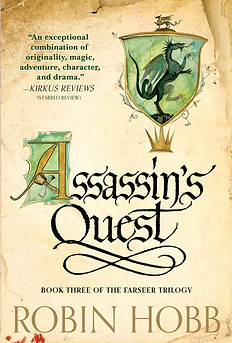
In this final installment of the Farseer trilogy, we join Fitzchivalry and his magically bound wolf on a pilgrimage to save the Six Dutchies. Driven by the disappearance of the rightful heir Verity and the wrath of his tyrannical uncle, Fitz is forced to confront his personal demons and uncover who he is beyond his title as a roya

This comprehensive manual breaks down the psychology of effective storytelling, the delineation between internal story and external plot, and how to use your character’s “third rail” as a propelling force. Writers tend to fall into one of two categories: methodical plotters and the spur-of-the-moment ‘pantser'. This book walks you through the flaws in these methods and suggests an alternative multilayered approach.

This is a series of short horror stories inspired by classic European fairytales, such as Little Red Riding Hood, Alice in Wonderland and Bluebeard. The first story follows a young bride who discovers that her betrothed

Nabokov's Lolita is about Humbert, a pedophilic professor who sets his sights on the twelve year-old "nymphet" Dolores Haze. Through a series of unfortunate events, Humbert becomes the adoptive father to Dolores, or "Lo" for short, and together they embark on a roadtrip across the country. He uses grooming tactics to get closer to her, and we see a shift in her emotional state as Humbert's flirtations develop into full-fledged sexual abuse. This is told through his first person perspective, so we get to experience his thoughts completely unfiltered. If you've heard of Nabokov or the infamous 1997 film adaptation, you'll know how controversial this novel is. It explores unequal power dynamics and the potential for innocent, vulnerable people to be be corrupted.

This story is set in 1940s Barcelona. We follow Daniel, the young son of a bookseller who is grieving the loss of his mother. One day, his father takes him to the Cemetery of Forgotten Books, where he must select a single novel to cherish and protect forever. He chooses the mysterious Shadow of the Wind and is instantly mystified by it. As Daniel grows older, he comes to obsesses over the book and the history of its author, Julian Carax, who has since disappeared. Daniel doesn't realize the dangers of his fascination until some strange characters emerge, and the race to find Carax's last surviving novels begins. The book motif is essential to Zafón's story, and symbolizes the immortal connection between memory and storytelling, obsession and love, and goodness versus corruption.

This year, I started working on the marketing desk for SJSU’s Reed Magazine and thought I should do my due diligence and read last year’s edition. Reed is the longest-running literary journal in California and features submissions from around the world. They work with various mediums, including visual art, poetry, and short- to long-form fiction and nonfiction. The visual art and textual components are cohesive and really helped to bring these stories to life. As someone aspires to get their own work published, this was a good primer for what lit mags might be looking for. I don’t typically gravitate toward nonfiction, but there were some excellent features that reminded me how the genre can serve as a medium for narrative storytelling. My favorite nonfiction piece was “Blank Spaces, Black Frames” by Kathryn Trueblood. The author uses observations, quotes, and fragments from her mother’s journal to illustrate the final years of her life. Using strategic omission and nonlinear chronology, the arc follows the internal state of Trueblood’s mother as she becomes more disconnected from life. These are interwoven with small, tender moments to convey death as an organic process, a rite of passage, and an act of coming home. I was also incredibly impressed by the Emerging Voices Contest winner, “Sparrows” by Crystal Zhu. The piece uses repetition, sound, and vignettes of seemingly mundane objects to reminisce on the times she spent at her grandmother’s home in childhood. Zhu has such a unique voice and respect for narrative conventions, which is rare for her young age. In just two pages, she paints a vivid picture of this golden time in her life, immortalizing these cherished moments through language. As anthologies tend to go, some pieces spoke to me personally more than others. Overall, this was a very dynamic read and I look forward to reading our upcoming edition in May.

This tells the family story and coming-of-age behind Cal/Calliope, who is intersex, meaning they were born with both male and female sex characteristics. This case specifically is an instance of an autosomal recessive disorder, or deviation from the typical genetic coding in a person's chromosomes. We begin in the 1920s with Lefty and Desdemona Stephanides, who are forced to flee from their home in Turkey during times of political upheaval. They end up immigrating together from the small town of Smyrna to Detroit, where they establish a new life. What no one realizes about the seemingly normal couple is that they are really brother and sister. Decades later, the two characters will become Calliope's (later Cal's) grandparents, and as a product of a mutated gene, will serve as the catalyst for Calliope/Cal's turbulent life. This family saga is rooted in transformation and process of trying to make sense of their gender identity while growing up in Michigan from the 1960s to 70s. As the years go on and Cal/Calliope enters the tender stage of puberty, they are met with confusion and a sense of fundamental differences between themself and their peers. In their transitioning to adulthood, Cal/Calliope escapes the toxic confines of her family to lead a better, more genuine life in San Francisco with new friends who they can relate to and love them unconditionally. In this book, the author Eugenides has crafted such a raw and honest depiction of what it's like to be different in a binary world. He also gets into some fascinating topics, for example the role of nature versus nurture in a person's development and the unique cultural identity of Greek-American immigrants.

John Steinbeck’s East of Eden takes place in the Salinas Valley of California, spanning from the end of the American Civil War to World War I. A spin on the Book of Genesis, this story begins with Irish-born immigrant Samuel Hamilton and the sons of an esteemed but deceitful war Veteran, Adam and Charles Trask. As each character grows, they create families of their own and build new, unlikely relationships--a Chinese-American farmhand with scholarly ambitions, a venomous runaway woman haunted by her p

I was drawn to this anthology after reading Hindi’s most viral work titled “Fuck Your Lecture on Craft, My People Are Dying,” which is an active rejection of poetry’s relationship to privilege in literature. In this collection, the speaker explores her experiences as a queer Muslim, being away from her family in Jordan, and how cultural taboos translate across nationalities. Her work falls under the category of political poetry, grappling with sensationalist portrayals of violence as entertainment for Western audiences. Ultimately, this book is about the intersection between mixed identities and how traumatic experiences can be a tool for art, activism, and ultimately, making peace.

I understand the significance of this book. The prose is understated and beautiful, reflecting the ability for nature to imitate art and vice versa. It relies on mythic conventions, but is also quite modern and simplified. Although it packs a punch with its moral gravity, I didn’t find it especially memorable. It was hard for me to relate to any of the characters, which I think is essential to short form. I was looking for something more to hold onto and root me into the characters’ perspectives and wasn’t getting that. If you’re looking for something thought provoking to read in one sitting, I would recommend this one.

Collapsible text is great for longer section titles and descriptions. It gives people access to all the info they need, while keeping your layout clean. Link your text to anything, or set your text box to expand on click. Write your text here...

King Richard II by Shakespeare is one of his most praised historical plays. It’s a salient tale of loyalty versus betrayal that also grapples with the meaning of glory in kingship or lack thereof. The story begins with two feuding noblemen, Henry Bolingbroke and Thomas Mowbray. They both accuse the other of treason by murdering Richard’s uncle, who is also the Duke of Gloucester. They bring these claim

This comprehensive manual breaks down the psychology of effective storytelling, the delineation between internal story and external plot, and how to use your character’s “third rail” as a propelling force. Writers tend to fall into one of two categories: methodical plotters and the spur-of-the-moment ‘pantser'. This book walks you through the flaws in these methods and suggests an alternative multilayered approach.

After Jake Spoon commits murder, he goes on the run and winds up in old stomping grounds—a sleepy little town called Lonesome Dove. He is reunited with other former Texan rangers, primarily the stoic head honcho Call and his spirited comrade Gus. Jake’s reappearance becomes an unexpected

I was craving something literary fiction and this delivered. Moshfegh explores very pertinent women’s issues, for example beauty as a commodity, the desire for male validation, and the enduring stigma of their emotions as “hysteria.” What stood out to me the most was the construction of the unnamed narrator. You can’t help but dislike her—she’s a pathological liar, impossible to depend on and bitter to everyone she encounters. Yet Moshfegh balances this effect through comic relief and absurdist realism. Essentially, the speaker’s alienating tone is offset by her sharpness and wit. Despite her pessimism, the narration is so visceral, relatable, and honest. This story surprised me in the way it deviates from classic narrative structures. It’s certainly dark, but it’s also beautifully written and such a raw evocation of the human experience that Moshfegh had me hanging on to her every word.

A collapsing extraterrestrial civilization sets out to invade Earth, sparking a global divide between those who wish to welcome the invaders and those willing to fight against them. The alien planet operates through a three-body phenomenon, in which the gravitational pull of three celestial bodies results in unpredictable cycles of catastrophe and stability. Nanomaterials researcher Wang gets roped into this mystery, which he explores through a virtual model of the planet. Each time he enters the simulation, the setting shifts--from the ancient pyramids of Egypt to medieval cathedrals--mirroring humanity’s repeated attempts to make order out of chaos. Wang’s investigation addresses the limits of scientific discovery, the consequences of rapid technological advancement, and the friction between ideological beliefs and empirical evidence.

This is the first installment in Larsson's world-renowned murder mystery series. It follows Mikael Blonkvist, a financial crime journalist who has recently been convicted of libel against the powerful Wennerström corporation. Blonkvist is hired by the elderly industrialist Henrik Vanger who's niece Harriet was the victim of an unsolved murder in the 1960s, on the very island Blonkvist used to visit with his family in childhood. Under the ruse of writing a personal biography for Henrik, he joins forces with hacker Lisbeth Salander. Salander is recruited by him to aid in the investigation, and both characters bring their unique skills to the table. Together, the two grow close and discover some long-held secrets regarding the Vanger family, but the underlying moral is the potential for self-growth and learning to be vulnerable with the ones we love. Above all, the book is a commentary on both systemic and interpersonal violence, specifically in the case of women in Swedish society.

This is the fictional life story of sex worker Tequila Leila from Van, framed within the ten minutes and thirty-eight seconds after her tragic death. Each chapter is paired with a defining moment from her life or specific bodily sensation she experienced, and the reader gets to witness these fragmented memories as they unfold deep within her consciousness. We follow along her difficult childhood, where she is sexually abused and forced into an arranged marriage, to adulthood when she decides to part with her controlling family and immigrate to Istanbul. With this period of extreme political instability as the backdrop, Leila becomes estranged from everyone she knows and loves, but on the other side of her pain is the liberation she finds in making a life for herself in Istanbul. This story is also guided by a colorful cast of characters that she meets along her journey. The reader is let in on a number of different angles surrounding Leila, from details about her life, what happens when her body is found, to how her closest friends navigate the grievous aftermath of her death. This book goes beyond sensationalism or the archetypal depiction of a battered women. Instead, it utilizes the dramatic plot points as a method to address difficult but important subject matter, for example the effects of marginalization, turbulent political climates and hypocrisy interwoven within Turkey's history. Yes, this book is dark at first glance, but really, it's a celebration of found family and the profound resilience of women.

There’s something strange about Jake. By all appearances, he’s endearingly shy, funny, and intelligent. But when he brings his girlfriend, the story’s narrator, on a roadtrip to see his parents in the countryside, a series of unsettling events unfold. As the tension builds, it becomes clear that he’s not everything he seems. From the dreary landscape to his antiquated childhood home and uncannily cheerful parents, something is amiss. Framed within this eery backdrop, the narrator must decide if, how, and when their relationship should come to an end. Should she remain in this unfulfilling romance, or end it and go back to her isolated world? Iain Reid’s I’m Thinking of Ending Things is a whirlwind psychological horror that blurs the line between what is thought, memory, and reality.

This is a mystery novel divided into three short volumes. It follows Emit Hopper, a chronically independent musician turned artist and writer. His life becomes disrupted when new evidence about his wife’s disappearance on the Pacific Crest Trail is uncovered. Hopper sets out on a lone investigation across Europe, where he chases leads, documents his surroundings through art, and becomes enmeshed with some nefarious figures. What makes these books so special is the mixed-media format. Madonna weaves his original pen-and-ink illustrations within the narrative, creating a layered sensory experience for the reader.

The Door by Hungarian author Magda Szabo is a deeply psychological character study about Emerence, a housekeeper working for the narrator, a young female writer. Right from the jump, these two characters are constantly at odds with one another. Emerence exhibits some strange behaviors; she refuses to accept gifts or visitors in her home, maintains odd working hours and obsesses over the care and keeping of her animals. As time goes on, however, we get more insight into her troubled past, including fraught family relationships and a vast history of death and disillusionment. As Emerence's health begins to decline from age, the narrator goes through hell and back just to cope with it. The two main characters ultimately transcend their differences in education and class to form a unique, almost maternal bond. The plot is driven by some pertinent central questions, for example what could Emerence be hiding in her apartment and why? Can we ever truly let go of the past and what are the boundaries of betrayal and love?

It’s 1912 in Brooklyn the Nolan family is tormented by poverty. The matriarch, Katie, works tirelessly as a janitress to make ends meet while her alcoholic husband Johnny takes a back seat. Even among the hungriest and loneliest of days, their eleven year-old daughter Francie finds escape in the world of literature. She goes from picking and selling trash for pennies with her brother Neeley to the pursuit of higher education and economic mobility. In this poignant coming-of-age, the reader gets to experience Francie’s growing and changing along with her. There is a loss of childlike innocence as she is exposed to life’s many dissolutions—from the struggles of the working class to war and gender inequality. This classic novel illustrates how we develop our individual perspectives, as well as the expectations for women to carry emotional burdens. It’s about beating the odds and finding beauty everyday jn even the smallest of things.

When twins Viola and Sebastian are separated in a cataclysmic shipwreck, both are led to believe that the other has drowned. While Sebastian wanders off with his savior, Viola finds employment as a servant for Duke Orsino in the fictional setting of Illyria. Orsino pulls Viola into a plan of deception in which she must disguise herself as a pageboy and help him woo prospective wife Olivia. She agrees and takes on the persona of Cesario, but unexpectedly, Olivia takes a liking to her false identity instead. From then on, the story devolves into a whirlwind of mounting chaos and blurred lines between gender. The other characters, namely the servants under Olivia also get wrapped up in some manipulative situations, showing how one small act can spin completely out of control and the distinction between true love and coersion.

This book revolves around three central characters: a young Victorian boy who develops an obsession for decoding ancient tablets, a Yazidi girl living in modern day Turkey under religious persecution, and a hydrologist grappling with a rocky divorce. What these seemingly unrelated characters have in common is a special connection to rivers and the oldest known poem, The Epic of Gilgamesh from the lost civilization of Mesopotamia. The plot is also guided by the path of a single drop of water, which emphasizes an interconnectedness across space and time. It’s a story about legacy, fate, and the preservation of memory.

This is a collection of short stories by Amal El-Mohtar, coauthor of This is How You Lose the Time War. El-Mohtar uses the conventions of classic folklore and spins them on their head to center strong female characters. Each story boils down to the love between w